
Divi 5 vs Elementor: Which WordPress Builder Should You Choose?
Table of Contents
If you have spent any time in the WordPress community, you have probably seen the Divi vs Elementor debate come up at least a dozen times. Both builders have loyal users, strong feature sets, and very different design philosophies.
In 2026, that debate looks different than it did a few years ago. Divi 5 has been completely rebuilt from the ground up, and Elementor has continued maturing its theme builder and ecommerce features.
So which one should you actually pick for your next project? After building dozens of sites with both, here is my honest comparison based on real-world use, not marketing pages.
The Short Answer
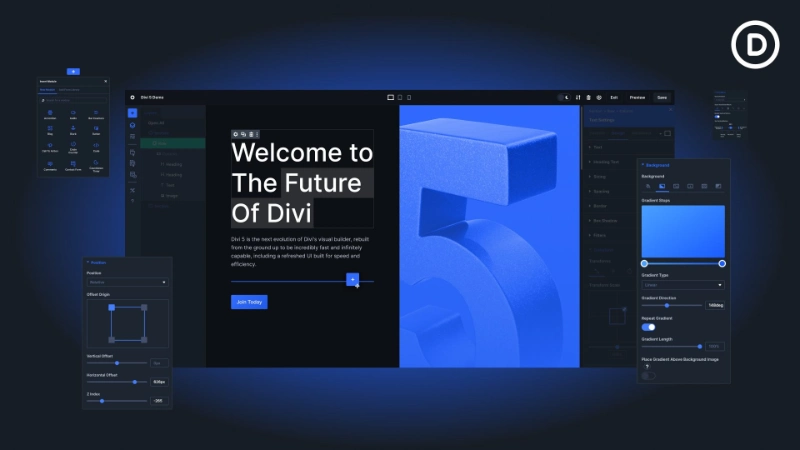
If you want a single all-in-one theme and builder with a one-time payment option, faster rendering after the Divi 5 rebuild, and a deep template library, Divi 5 is the stronger choice.
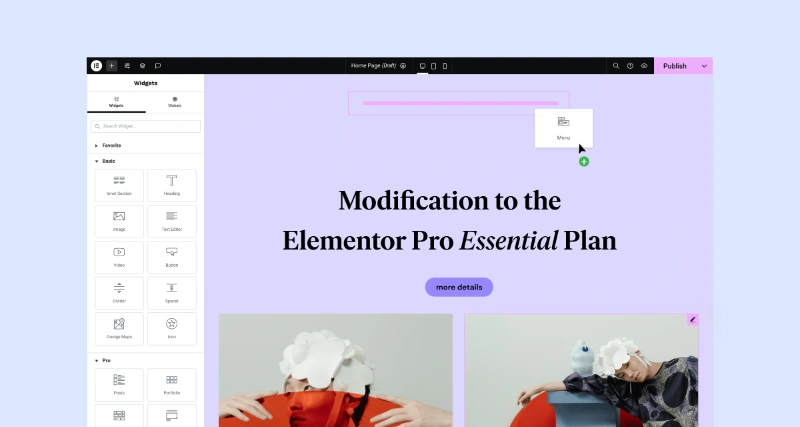 If you want a modular ecosystem with a massive third-party addon market and a more familiar workflow for designers coming from tools like Webflow, Elementor still has a place.
Both can build excellent websites. The right pick depends on how you work, what you build, and how you want to handle long-term costs.
Quick Comparison Table
| Feature | Divi 5 | Elementor Pro |
|---|---|---|
| Pricing model | Lifetime option available | Annual subscription only |
| Visual builder | Native, deeply integrated | Native |
| Theme builder | Included | Included in Pro |
| Performance after rebuild | Significantly improved | Steady improvements |
| Template library | 2,000+ layouts | Large library |
| Learning curve | Moderate | Moderate |
| Third-party addons | Growing | Very large |
| WooCommerce support | Strong | Strong |
| CSS Grid support | Native in Divi 5 | Via container layout |
This is a high-level view. The real differences show up once you actually start building.
Performance: A Major Shift in 2026
Performance used to be one of the strongest arguments against Divi. The old shortcode-based system produced heavy HTML and slowed down both the editor and the front end.
Divi 5 fixed that. The new rendering engine outputs cleaner HTML, loads only the CSS your page actually needs, and feels noticeably faster in the visual builder. I covered this in detail in our Divi 5 performance guide.
Elementor has also improved performance over the years, especially with its container-based layouts replacing the older section and column system. Both builders are now in a much better place than they were in 2022 or 2023.
In direct testing on similar layouts and identical hosting, Divi 5 tends to produce slightly lighter pages, while Elementor offers slightly faster editor performance on very complex layouts. Either is acceptable for production sites in 2026.
Pricing: The Most Practical Difference
This is where the two builders take very different paths.
Divi offers:
- An annual plan
- A lifetime plan with a single payment
- Unlimited websites on either plan
- Access to Divi, Extra theme, Bloom, Monarch, and Divi AI
Elementor offers:
- Annual subscription only
- Tiered plans based on the number of sites
- Pro features locked to active subscriptions
For freelancers and agencies who build many client sites, Divi’s lifetime plan and unlimited usage can lead to substantial savings over a few years. Elementor’s pricing scales up quickly once you cross five or ten client sites.
If you only run one or two personal sites, the cost difference matters less. But for anyone doing this professionally, it adds up fast.
Ease of Use
Both builders are visual and drag-and-drop. Both let you edit text inline, drop in modules, and preview changes instantly.
Where they differ is in workflow:
- Divi uses a module-based system inside rows and sections, with an optional layers panel for navigating complex layouts
- Elementor uses a left sidebar for adding widgets and editing settings, with a more traditional panel-style interface
Neither is objectively better. Designers coming from Photoshop or Figma sometimes prefer Elementor’s sidebar. Designers who like a clean, distraction-free canvas often prefer Divi.
After the Divi 5 rebuild, the visual builder feels much more responsive, which makes the day-to-day editing experience noticeably smoother than before.
Design Flexibility
Both builders offer extensive design controls. You can adjust spacing, typography, colors, borders, shadows, hover states, and responsive behavior in detail.
Divi 5 added some features that close longstanding gaps:
- Native CSS Grid layouts, covered in our Divi 5 CSS Grid review
- Aspect ratio controls and image presets
- Improved responsive editing
- Cleaner inline styling
Elementor offers similar capabilities through its container system and theme styles, plus a deep ecosystem of third-party addons that extend the builder in almost every direction imaginable.
For most projects, both will get the job done. For very specific custom design systems, the third-party Elementor addon market still has more variety.
Template and Layout Libraries
Divi ships with over 2,000 pre-made layouts organized into full website packs. You can import an entire multi-page website in a few clicks, customize it, and launch.
Elementor has a strong template library as well, plus access to many third-party template kits and Envato Elements integrations.
If you build websites quickly for clients and want to start from polished designs, both are excellent. Divi’s organized layout packs feel more cohesive for full-site builds, while Elementor’s ecosystem is broader for individual sections and components.
Theme Builder and Dynamic Content
Both builders include a theme builder that lets you design headers, footers, blog templates, archive pages, single post templates, and product pages.
Divi 5 simplifies this with a clean interface and dynamic content options that pull from WordPress, custom fields, and ACF. The recent Book Leap landing page customization tutorial shows how easy it is to swap in dynamic site logos and menus.
Elementor’s theme builder is similarly capable and integrates well with custom post types and WooCommerce.
This is one area where both are mature and reliable.
WooCommerce and Ecommerce Capabilities
For online stores, both builders offer strong WooCommerce integration.
Divi 5 includes WooCommerce modules for:
- Product galleries
- Add to cart buttons
- Pricing tables
- Cart and checkout customization
- Product loops
Elementor Pro offers a similar set of WooCommerce widgets with additional ecommerce-focused templates.
For most stores under 500 products, both work well. For very large catalogs, the bigger consideration is hosting and product optimization, not the builder itself.
Plugin Ecosystem and Addons
Elementor has the larger third-party addon ecosystem. Plugins like Essential Addons, Ultimate Addons, and Crocoblock extend it significantly.
Divi’s ecosystem is smaller but growing fast, and many designers find that the built-in modules cover most needs without extra plugins. This actually helps with performance, since fewer addons mean fewer scripts and less overhead.
If you rely heavily on third-party widgets, Elementor still wins here. If you prefer a more self-contained system, Divi 5 has an edge.
Long-Term Stability and Updates
Elegant Themes has been running since 2008 and has shipped consistent updates for over a decade. Divi 5 represents a major architectural investment that signals long-term commitment.
Elementor is also well-funded and updated regularly, though some users have noted that newer features sometimes ship with rough edges.
Both are safe choices for long-term projects. Neither is going anywhere.
Which One Should You Choose?
Here is a practical breakdown based on real use cases.
Choose Divi 5 if you:
- Want a one-time payment option
- Run an agency or freelance business with many client sites
- Prefer a unified theme and builder system
- Value the new CSS Grid and image controls
- Want a large layout library included by default
Choose Elementor if you:
- Prefer a familiar sidebar-style editor
- Rely heavily on third-party addons
- Run a single site and prefer annual billing
- Already have an established Elementor workflow
There is no wrong answer. Both can produce professional websites. The right choice depends on your business model, your design preferences, and your long-term plans.
FAQ
Is Divi 5 better than Elementor for SEO?
Both builders produce SEO-friendly output. Divi 5’s lighter HTML and improved Core Web Vitals can offer a small advantage on page speed, which is one SEO ranking factor. Content quality and site structure still matter much more.
Can I switch from Elementor to Divi 5?
Yes, but it involves rebuilding pages, since the two builders use different shortcode and component systems. Migration plugins exist but rarely produce clean results. Plan for a full design pass when switching.
Which builder is easier for beginners?
Both have learning curves. Elementor’s sidebar feels familiar to anyone who has used design tools. Divi’s visual canvas feels cleaner once you get used to it. Beginners can succeed with either.
Is Divi 5 worth the upgrade from Divi 4?
Yes. The performance improvements alone justify the move for most websites. Plan the migration carefully on a staging site first.
Does Divi 5 work with all hosting providers?
Divi 5 works with any WordPress host, but performance depends on PHP version, server caching, and memory. Modern managed WordPress hosts produce the best results.
Final Thoughts
In 2026, the Divi vs Elementor debate has matured. Both builders are far better than they were a few years ago, and either can produce excellent websites in capable hands.
For most freelancers, agencies, and business owners I work with, Divi 5 has become the more practical choice. The lifetime pricing, the rebuilt rendering engine, and the deep template library make it efficient for both single projects and high-volume client work.
If you want to explore what Divi 5 can do, browse our premium Divi layouts or reach out through our contact page for project advice. And if you are still weighing the decision, install both on staging sites and spend an hour with each. The right builder will feel obvious once you do.
About the Author

MD Nurullah
MD Nurullah is a web developer and content creator at DiviFlow, focused on building modern websites and creating helpful resources for the WordPress community.